
We Spent Decades Cleaning the Charles. So Why Can't You Touch the Water?
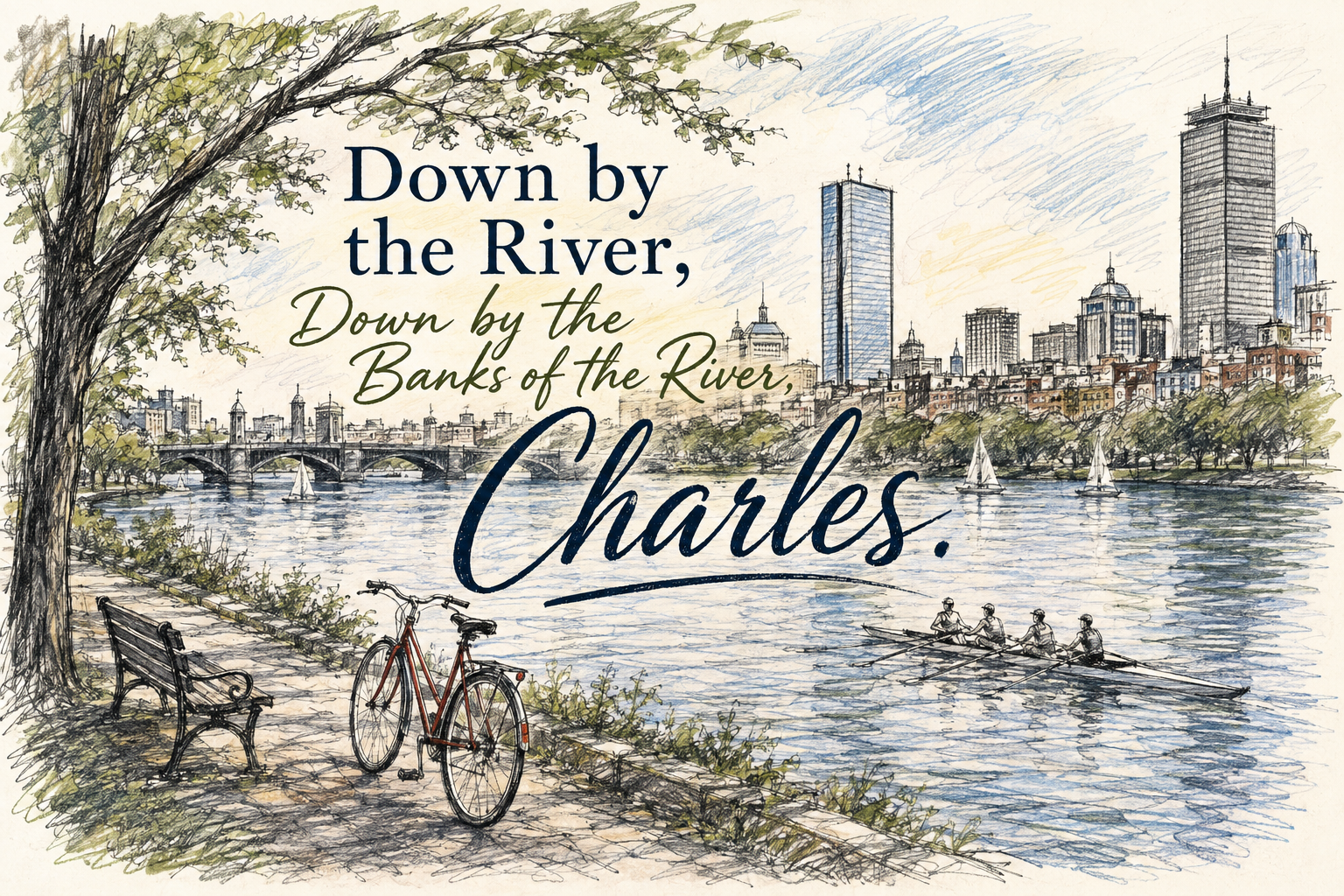
Charles River, Boston, Massachusetts
I grew up about a mile from the Charles River, and through most of my formative years and much of my adult life, I was rarely very far from it.
The Charles was simply part of my landscape.
And to me, it was always dirty water.
Not because the Standells gave Boston a song we eventually adopted as practically an anthem.
The water was dirty.
That was just something we knew.
You could walk beside it, run beside it, bike beside it, row on it, sail on it, picnic beside it, fall in love beside it, break up beside it.
You just didn't want to be in it.
So I've watched with some amazement as the story of the Charles has changed during my lifetime.
We cleaned it up.
Really cleaned it up.
People even began talking seriously about something that would have sounded borderline insane when I was young:
Swimming in the Charles.
And now Boston is telling us to stay out of the water again.
Keep the kids out.
Keep the dog out.
Don't kayak in it. Don't paddleboard in it. Don't fish in it.
My first reaction was probably the reaction of anyone who remembers the old Charles.
Well, so much for that.
Except that's not really what's happening.
The Charles of 2026 isn't the Charles I grew up beside.
The river got cleaner. The problems changed.
And that's a much more interesting story.
So What Happened This Week?
The Boston Public Health Commission issued an advisory after Massachusetts health officials found cyanobacteria above state recreational-water guidelines in the Charles River Lower Basin downstream of the Massachusetts Avenue Bridge.
This is not an advisory for the entire 80-mile Charles River.
But this particular stretch is a big deal.
This is the Charles people picture when they picture Boston: the Esplanade, sailboats, rowers, runners, the Harvard Bridge, Back Bay on one side and Cambridge on the other.
Health officials are telling people to avoid direct contact with the water in the affected area until further notice.
That means no swimming, kayaking, canoeing, paddleboarding or fishing. Pets shouldn't swim in it, drink it or even wander through algae collecting along the shoreline.
If you or your pet does come in contact with the water, rinse off.
So what exactly has invaded my supposedly cleaned-up river?
First, Cyanobacteria Aren't Really Algae
Despite the familiar name blue-green algae, cyanobacteria are actually bacteria.
They're ancient organisms that naturally occur in freshwater. Having some cyanobacteria in a river isn't remarkable.
Having enormous amounts of them is.
Under the right conditions — warm water, sunlight, relatively slow-moving water and an ample supply of nutrients — cyanobacteria can multiply rapidly into a bloom.
And the lower Charles can provide a pretty comfortable summer home.
Some cyanobacteria can produce toxins capable of causing skin and eye irritation, nausea, vomiting and diarrhea. At sufficiently high exposures, the effects can become much more serious.
Dogs are particularly vulnerable because they may drink contaminated water or lick algae from their fur.
If the water starts looking like someone spilled green paint or pea soup into the Charles, this is not the moment to let Fido take a dip.
But Didn't We Clean This River?
Oh, we did.
This is the part of the story that surprised even me when I went back through the numbers.
By the late 20th century, the Charles had spent generations absorbing the consequences of a city growing around it.
Industry polluted it. Sewage entered it. Storm drains carried contamination into it. Combined sewer overflows dumped sewage-contaminated water into it during wet weather.
In 1995, the Environmental Protection Agency launched the Clean Charles River Initiative with an audacious goal:
Make the Charles fishable and swimmable.
That year, the lower Charles earned a D on EPA's report card.
It met swimming standards only about 19 percent of the time.
That sounds much more like the Charles I remember.
Then Boston and its neighbors started attacking the problem.
Illegal sewage connections were identified and removed. Sewer infrastructure was rebuilt. Combined sewer overflows were closed or controlled. The Deer Island treatment system transformed wastewater treatment for Greater Boston.
The numbers are remarkable.
According to EPA, combined sewer overflow discharges to the lower Charles once totaled roughly 1.7 billion gallons a year.
Those discharges have since been reduced by more than 99 percent.
More than a million gallons per day of sewage-contaminated stormwater from illicit connections was also eliminated from municipal storm drains during the broader cleanup effort.
By 2017, the river was meeting bacterial standards for boating 95 percent of the time and swimming 72 percent of the time.
That's not cosmetic improvement.
That's an environmental success story.
So Why Are We Back to “Don't Touch the Water”?
Because cleaning up sewage didn't magically solve every problem facing an urban river.
One of the biggest remaining problems is phosphorus.
Plants need phosphorus.
So do algae and cyanobacteria.
Give them too much of it and you've essentially catered the buffet.
Phosphorus reaches the Charles through stormwater runoff and other sources throughout the watershed. Rain washes material from streets, lawns, parking lots and developed land into storm drains and eventually toward the river.
Once those nutrients are in the water, summer can do the rest.
Warm water.
Sunlight.
Nutrients.
Relatively slow-moving stretches of river.
Suddenly the Charles has all the ingredients for a bloom.
EPA has been warning about excessive nutrients in the Charles for years. In fact, Massachusetts and EPA established a pollution limit for phosphorus in the lower Charles back in 2007.
So this isn't a mysterious new contaminant that suddenly appeared in 2026.
It's an old problem becoming increasingly difficult to ignore.
And Then There's Heat
This is where the future of the Charles gets more complicated.
Cyanobacteria generally thrive in warm conditions.
Warmer summers and warmer water can lengthen the period when blooms have an opportunity to develop. Heavy rain can wash additional nutrients into waterways. Long hot stretches can then create favorable growing conditions.
That doesn't mean you can point at one algae bloom and say, climate change did this.
Rivers don't work that simply.
But a warming climate can create conditions that make harmful blooms more likely or allow them to persist longer.
Which means Boston may have successfully attacked one generation of Charles River pollution while entering another environmental fight altogether.
The Charles Has Had This Problem Before
This week's warning isn't a freak event.
A cyanobacteria advisory was issued for the lower Charles in August 2025 as well.
And earlier this summer, Boston health officials investigated a potential bloom farther upstream, between Kendrick Street in Needham and Spring Street in West Roxbury.
That matters.
If this were simply a once-in-a-generation oddity, we'd wait for the bloom to disappear and move along.
Repeated blooms suggest something worth paying attention to.
The river may be dramatically cleaner than it was when I was growing up and still have serious problems.
Both things can be true.
Wait. People Really Swim in the Charles?
This may be my favorite part of the whole story.
Yes.
People swim in the Charles.
Not whenever and wherever they feel like it. Swimming remains restricted and carefully controlled.
But organized swimming events have returned to the river, something that would have been difficult to imagine during the Charles' dirtiest years.
And there have been serious efforts to create permanent swimming opportunities in the lower Charles.
For someone whose lifelong relationship with this river began with the assumption that of course you don't swim in the Charles, that's almost harder to process than the cleanup statistics.
Maybe reputations are harder to clean than rivers.
“Dirty Water” Never Really Meant We Hated It
There's a reason Boston adopted a song called “Dirty Water” as an anthem.
We weren't bragging about sewage.
The song became affectionate because the Charles belonged to us even when it was filthy.
Maybe especially then.
There's something very Boston about loving a place while complaining about it relentlessly.
The Charles was our dirty river.
And for people of my generation, that reputation became almost permanent.
But the river running through Boston today is substantially cleaner than the one I grew up beside.
That's worth saying.
It's also worth protecting.
Because the lesson of the Charles isn't that we spent decades cleaning it and somehow failed because cyanobacteria showed up.
The lesson is almost the opposite.
We proved that a badly polluted urban river can recover when people decide it matters.
Now the problems are changing.
Instead of simply asking how to keep sewage out of the Charles, we're asking how to control nutrients, stormwater and harmful blooms in a densely developed watershed under changing environmental conditions.
That's not evidence that the cleanup didn't work.
It's evidence that environmental work doesn't have a finish line.
For Now, Stay Out of This Part
The current advisory applies to the Charles River Lower Basin downstream of the Massachusetts Avenue Bridge.
Until health officials lift it, avoid direct contact with the water there and keep children and pets away from the affected water and algae along the shoreline.
You can still do what generations of us have done.
Walk beside it.
Bike beside it.
Sit on the bank.
Watch the rowers.
Watch the sailboats.
Talk for hours.
Look across at Cambridge or back toward Boston and wonder how many versions of this city that river has watched come and go.
I've known the Charles for most of my life.
For much of that time, I thought of it as dirty water.
Turns out I need to update that.
The Charles isn't the dirty river I grew up with.
But keeping it that way may turn out to be a lifelong job.
Come Along for the Next Boston Story
The Charles has been part of my Boston for most of my life, and somehow I'm still discovering things about it I didn't know.
That's really what GoBoston is about: looking again at the places we think we know and finding the history, people, oddities and stories hiding underneath.
If that's your kind of Boston, join me on the GoBoston Substack. That's the easiest way to get the next story when I publish it.
There is always another Boston story waiting.