
ICE Wants Boston’s Robot Dog
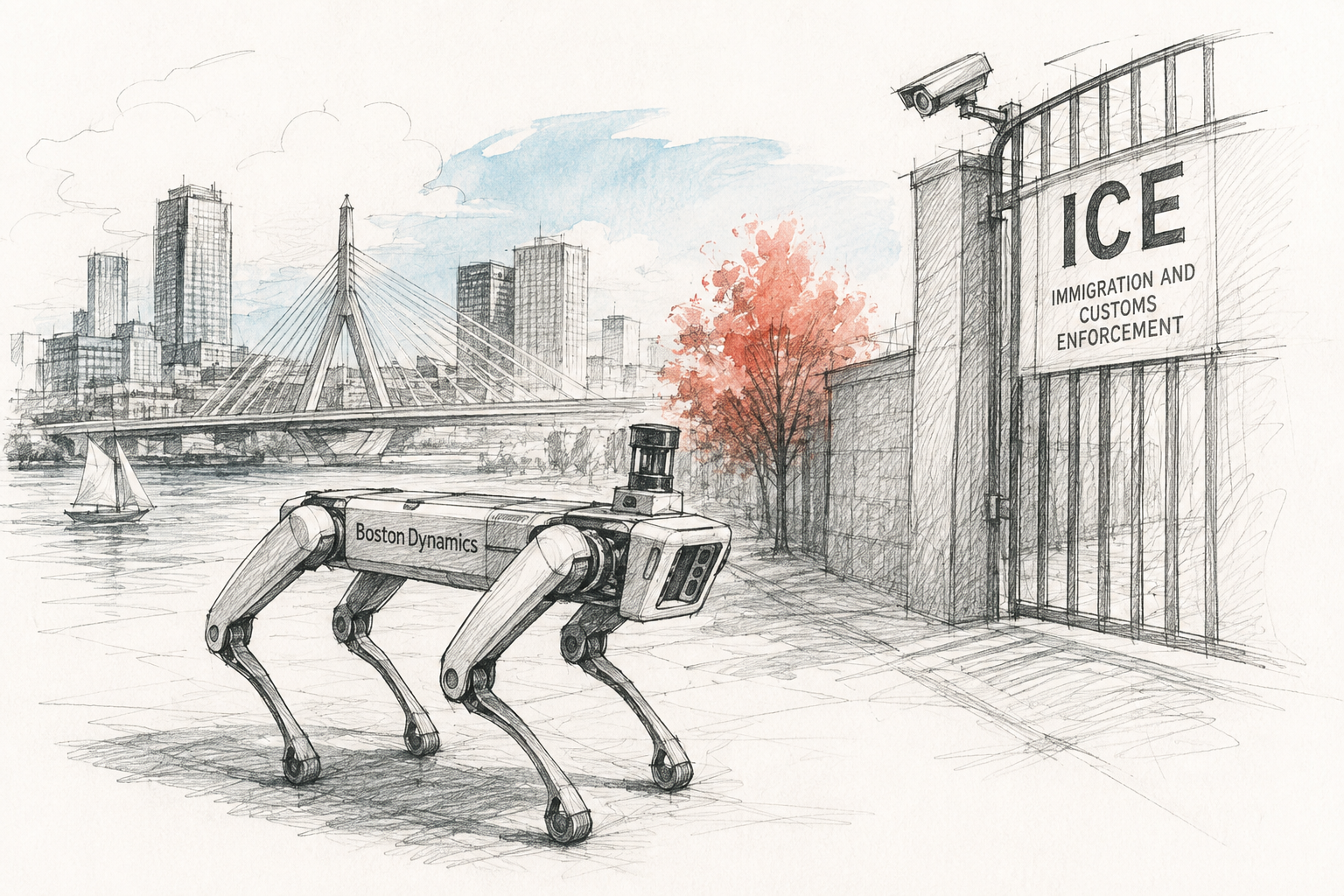
Boston Dynamics Robot Spot — Use by ICE
Boston Dynamics built Spot to go where humans shouldn’t have to. Now ICE wants it for immigration enforcement.
Boston Dynamics’ Spot has danced, climbed stairs, opened doors and wandered through places too dangerous to send a person.
Now ICE wants some.
The Department of Homeland Security has posted a procurement forecast for Immigration and Customs Enforcement to buy Boston Dynamics Spot robots, with an estimated price of $1 million to $2 million.
The solicitation is expected to be released September 4, so this isn’t a completed purchase yet. But the intended use is already clear.
DHS says ICE wants Spot for “inspection, situational awareness, and hazard assessment” in dangerous, confined, unstable or difficult-to-access environments. The robots would be remotely operated and could allow agents to see what is happening somewhere before sending a person inside.
On its face, there is an obvious argument for that technology. If there is hazardous gas, an explosive device, an unstable building or an armed person behind a door, sending a robot first can save a human life.
That is exactly the kind of work Spot has already done.
But immigration enforcement changes the context.
The Question Isn’t Whether Spot Has a Gun
Boston Dynamics is explicit about this. The Waltham-based company prohibits weaponizing its robots. It says its products cannot be used as weapons, configured to carry weapons, or used to harm or intimidate people or animals.
That matters.
But it doesn't answer the larger question.
What changes when immigration enforcement can send cameras, sensors and remotely operated machines somewhere before a human officer ever walks through the door?
A robot doesn't have to carry a weapon to change the power of the agency deploying it.
Spot can give officers remote visibility into places they cannot see. Depending on its configuration, the platform can carry cameras and specialized sensors. It can climb stairs, negotiate rough terrain and enter spaces where sending a human would be risky.
Those capabilities make tremendous sense when the robot is looking for a gas leak or inspecting a suspicious package.
They deserve considerably more scrutiny when the agency controlling the robot is conducting immigration enforcement.
A Very Massachusetts Story
There is also something distinctly uncomfortable about seeing one of Massachusetts’ most famous technology companies pulled into this moment.
Boston Dynamics grew out of MIT research and today operates from Waltham. Spot became famous partly because Boston Dynamics showed the world robots doing things we had never seen robots do before.
They danced.
They ran.
They opened doors.
They were astonishing and sometimes funny, which made the technology feel less threatening.
Now one of those machines could become part of the infrastructure of Trump's immigration crackdown.
Boston Dynamics says it will not authorize uses that violate privacy and civil-rights laws and that weaponization is strictly prohibited. Those are important boundaries.
But we're entering territory where “Is the robot armed?” is no longer a sufficient test for how powerful or intrusive a technology can become.
The more important questions are where these machines will be sent, what they will collect, who will be watched, how the information will be used and what rules will govern them.
Massachusetts helped build this technology.
We should probably be paying very close attention to where it walks next.
GoBoston covers the people, places, technology and politics shaping Greater Boston and Massachusetts. For more Boston stories and conversation, visit GoBoston on Substack and join the community there.