
Banned in Boston: Seven Books They Didn't Want You to Read
Poetry, scandal, forbidden love, religious hypocrisy, and the Boston censors who inadvertently made books irresistible.
There was a time when three little words could turn an ordinary book into a national sensation.
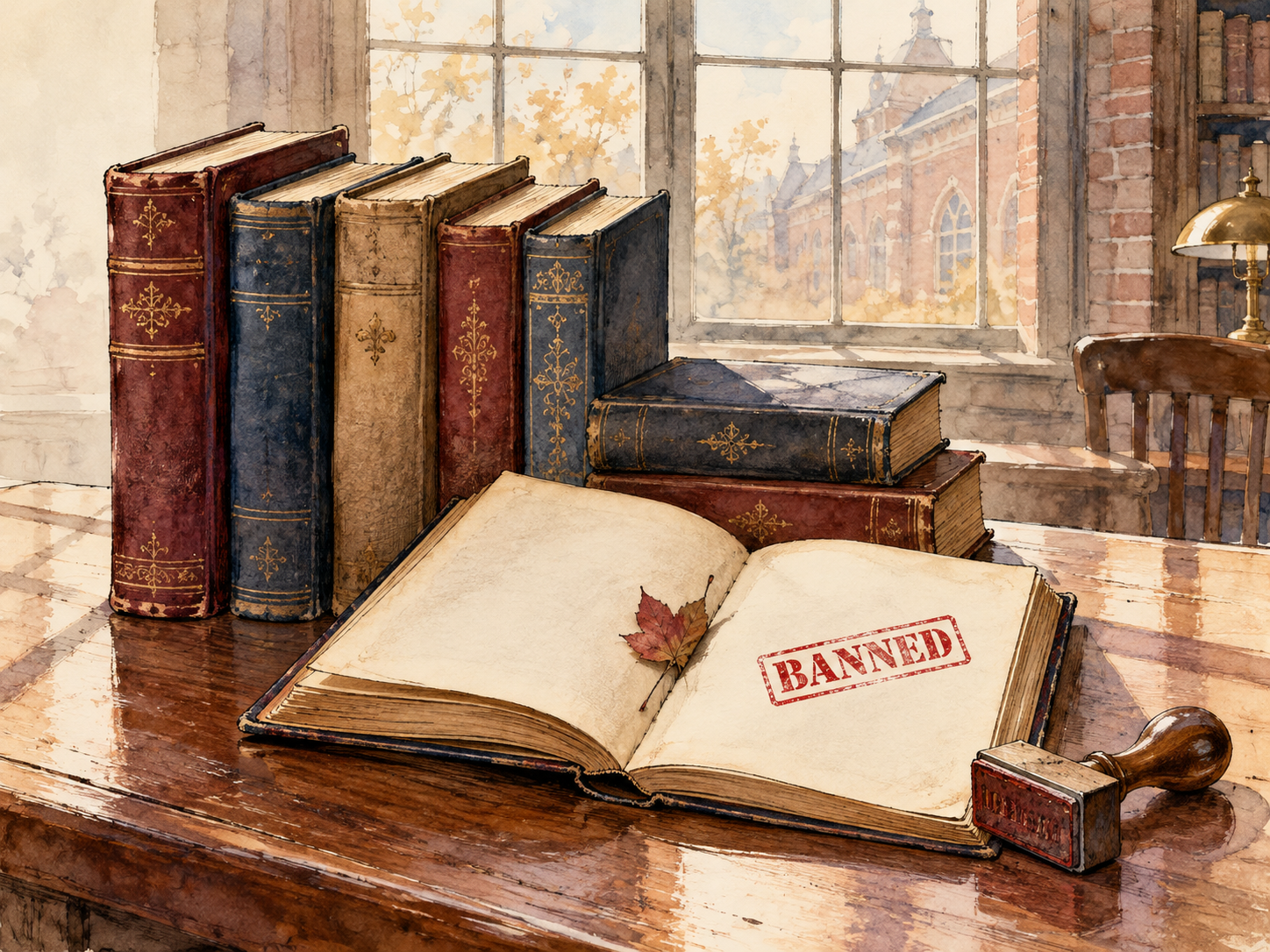
Banned in Boston: Seven Books They Didn't Want You to Read
Banned in Boston.
Imagine walking into a Boston bookstore in the 1920s and asking for a particular novel, only to discover that the bookseller was afraid to sell it to you.
Not because it was out of print. Not because the publisher had withdrawn it. But because powerful people in Boston had decided the public shouldn't read it.
For decades, the city's Watch and Ward Society and its allies exerted extraordinary influence over what could appear on local bookshelves. Some books were prosecuted under obscenity laws. Others were quietly withheld because booksellers feared prosecution or pressure.
The result was one of the most peculiar chapters in American literary history.
Boston became so famous for banning books that being banned in Boston became a reason to buy one.
And some of those supposedly dangerous books are now considered masterpieces.
Here are seven books that found themselves in the crosshairs of Boston's censors—and why they're still worth reading today.
This article contains affiliate links. As an Amazon Associate I earn from qualifying purchases.
1. Leaves of Grass — Walt Whitman
The offense: Poetry that celebrated the human body, sexuality, and individual freedom.
Published in 1855 and repeatedly revised throughout Whitman's life, Leaves of Grass challenged conventional ideas about poetry, religion, sexuality, and the relationship between the individual and society.
In 1882, Boston authorities deemed portions of the collection obscene. The controversy placed Whitman at the center of a battle over whether frank expressions of human experience belonged in literature.
What makes the episode particularly remarkable is what followed. Whitman's poetry became foundational to American literature, celebrated for its democratic spirit, expansive vision, and unapologetic individuality.
Boston's censors saw dangerous indecency. Generations of readers found one of America's most distinctive poetic voices.
Why read it today? Because few writers have celebrated the complexity and freedom of being human quite like Walt Whitman.
Find Leaves of Grass on Amazon →
2. The Plastic Age — Percy Marks
The offense: A candid portrayal of college life, drinking, relationships, and changing social values.
Published in 1924, The Plastic Age follows a young college student navigating academic life, social expectations, romance, and the temptations of campus culture during the Jazz Age.
By 1927, the novel had become one of the flashpoints in Boston's growing battle over literary censorship.
Boston police treated the book as objectionable, and its suppression helped trigger what contemporary observers called the Boston Book War.
The controversy revealed just how broadly censorship could be applied. A novel about young adults behaving imperfectly was enough to provoke police intervention and pressure on local booksellers.
Why read it today? Beyond its literary merits, the novel is an intriguing window into the anxieties surrounding young people, sexuality, and social change a century ago.
Find The Plastic Age on Amazon →
3. Elmer Gantry — Sinclair Lewis
The offense: An unflattering portrait of religion, hypocrisy, and a morally compromised preacher.
Sinclair Lewis published Elmer Gantry in 1927, introducing readers to an ambitious, charismatic preacher whose public moral certainty bears little resemblance to his private behavior.
Religious leaders were outraged.
The novel became a target of Boston's censorship campaign, and booksellers faced pressure to remove it from sale. Copies were returned to publishers as the city's literary battle intensified.
Lewis had exposed a particularly uncomfortable possibility: that the people preaching the loudest about morality might not be practicing much of it themselves.
The book went on to become one of his best-known novels. Lewis received the Nobel Prize in Literature in 1930.
Why read it today? Its exploration of religious performance, manipulation, ambition, and hypocrisy remains startlingly recognizable.
4. An American Tragedy — Theodore Dreiser
The offense: Sex, abortion, murder, and a disturbing examination of American ambition.
Theodore Dreiser's 1925 novel tells the story of Clyde Griffiths, a young man whose pursuit of wealth and social advancement leads to devastating moral choices.
It is not a comfortable novel. It was never intended to be.
Boston authorities targeted An American Tragedy during the 1927 censorship battles. Publisher Donald Friede deliberately challenged the restrictions by selling a copy to a police officer, resulting in his arrest.
The resulting legal proceedings became another public confrontation over the power to decide which works of literature were acceptable.
The irony was impossible to miss. A serious novel examining the consequences of moral failure was itself condemned in the name of public morality.
Why read it today? Dreiser's exploration of class, ambition, desire, and the American Dream still raises uncomfortable questions about what society rewards—and what it destroys.
Find An American Tragedy on Amazon →
5. Oil! — Upton Sinclair
The offense: Nine objectionable pages in a sprawling novel about oil, money, labor, and power.
This may be my favorite example of censorship backfiring.
Upton Sinclair published Oil! in 1927, creating a sweeping examination of the American petroleum industry, wealth, labor struggles, and political influence.
Boston's authorities objected to passages involving sexuality.
According to Sinclair himself, the censors identified nine pages out of a novel containing more than 500.
Sinclair responded with the sort of publicity that makes modern marketers envious.
He protested the ban, addressed crowds in Boston, and wrote about the absurdity of having his book promoted by the very people trying to suppress it.
He understood that the controversy was driving interest in his work.
In a 1927 essay for The New Yorker, Sinclair mocked the economic benefits of being declared obscene in Boston.
The censors wanted fewer people to read Oil! Instead, they gave its author a national advertising campaign.
Why read it today? Because its examination of oil, wealth, political influence, and the concentration of economic power remains relevant nearly a century later.
6. Candide — Voltaire
The offense: Satire, irreverence, and an unwillingness to treat established authority with sufficient respect.
First published in 1759, Voltaire's Candide is one of the great works of philosophical satire.
Through its frequently outrageous adventures, it attacks hypocrisy, cruelty, religious intolerance, and the comforting belief that everything happens for the best.
Boston's Watch and Ward Society placed Candide on its blacklist in 1928.
Imagine a French Enlightenment classic, written nearly 170 years earlier, still frightening the guardians of public morality in twentieth-century Boston.
Perhaps what made the book particularly dangerous was not simply its sexual or irreverent material, but its habit of questioning the assumptions that powerful institutions preferred people to accept.
Why read it today? Because Voltaire reminds us that skepticism, humor, and independent thought can be powerful responses to institutional arrogance.
7. Strange Fruit — Lillian Smith
The offense: A novel about an interracial relationship in the segregated American South.
By 1944, Boston's censorship history was already notorious. Yet the city was still targeting controversial literature.
Lillian Smith's Strange Fruit explores the destructive consequences of racism through a forbidden relationship between a white man and a Black woman in Georgia.
Boston police declared the novel obscene and banned its sale.
The controversy extended beyond Massachusetts, with the book also encountering restrictions elsewhere. Although objections frequently emphasized particular words or passages, the novel's confrontation with racial injustice was inseparable from the public response.
There is something profoundly revealing about calling a work obscene when its central concern is the cruelty produced by prejudice and social convention.
Strange Fruit became a bestseller despite the controversy.
Why read it today? Because it confronts the human cost of racism, silence, and the social systems that punish people for crossing boundaries others have created.
Find Strange Fruit on Amazon →
The Censors Lost. The Books Survived.
Look at that list.
Whitman. Lewis. Dreiser. Sinclair. Voltaire.
Writers whose works have endured for generations, while the institutions that attempted to suppress them became cautionary examples in the history of American censorship.
Not every book on this list was banned through the same mechanism. Some faced criminal proceedings. Others were blacklisted, pressured out of bookstores, or deemed too risky to distribute.
But the underlying question was the same.
Who gets to decide what another person is allowed to read?
In Boston, the answer was too often a small collection of influential people who believed their moral judgment should govern everyone else's choices.
History has been rather unkind to that arrangement.
The Banned in Boston Bookshelf
These seven titles are just the beginning.
As our Banned in Boston collection grows, we'll explore additional books, authors, plays, films, and other works that faced censorship in the city.
Some became classics. Others have been largely forgotten. All have something to teach us about the relationship between authority, culture, and freedom of expression.
And during Banned Books Week 2026, those lessons feel particularly urgent.
The freedom to read isn't measured by how comfortably we tolerate ideas we already agree with. It's measured by what happens when someone publishes something we don't.
The next time you hear that a book has been banned, perhaps the most useful response is also the simplest:
Find out what it says.
Read it.
And make up your own mind.
Join My GoBoston Community
Boston's history is filled with remarkable characters, forgotten controversies, extraordinary books, and stories that deserve another look.
If you enjoy discovering the Boston behind the familiar landmarks, I invite you to join me on GoBoston Substack. It's free to subscribe, and you'll receive new stories about Boston's history, culture, neighborhoods, people, and places.
You can also explore our growing Banned in Boston collection at BannedInBoston.com, where we'll continue uncovering the books and ideas that once scandalized the city.
Good stories deserve to be told. Great ideas deserve to be shared. And neither should ever be silenced.