
Massachusetts Has Plenty of This Fish. So Why Aren’t We Eating It?
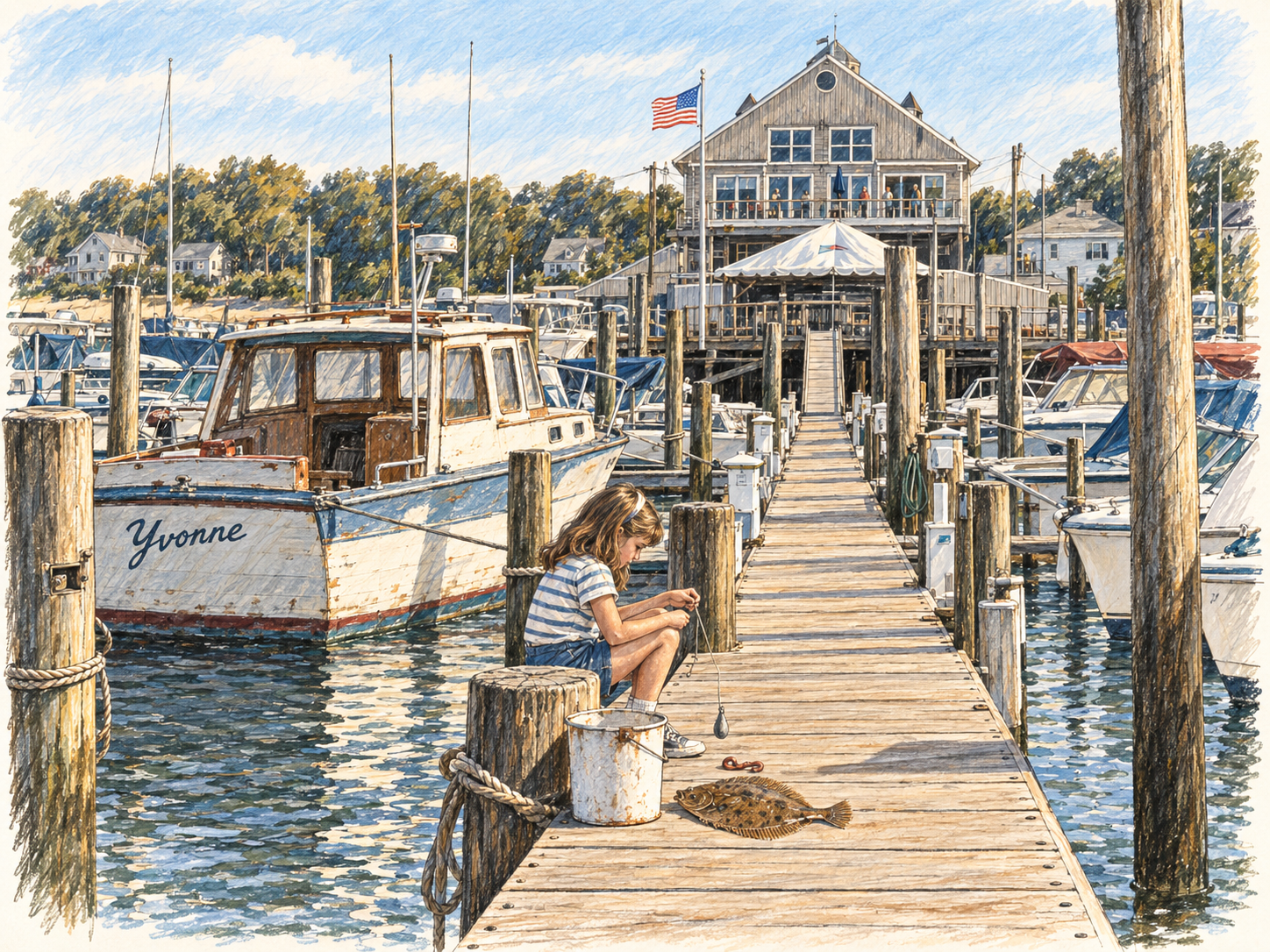
Massachusetts Has Plenty of This Fish. So Why Aren’t We Eating It? Orient Heights Yacht Club, Boston Harbor
Massachusetts wants to make flounder cool again. For me, it tastes like East Boston, old wooden boats, hand lines, biting sea worms and one hell of a childhood on Boston Harbor.
When I read that Massachusetts is trying to get people to eat flounder again, I didn’t immediately think about commercial fishing quotas or restaurant menus.
I thought about my father.
When I was a kid, my father bought a couple of old wooden cabin cruisers. He started with a 24-footer and eventually graduated to a 28-footer, which felt enormous to us at the time. Looking back, it is something of a miracle that we survived them.
These were not yachts. We were a blue-collar family, and my father had a machine shop in the cellar of our house. The boats were already old when he bought them, made of wood and forever needing something fixed, but to us they were freedom.
For a while, we went out of a small club at Belle Isle. We didn’t have a slip, so the boat sat on a mooring. That meant loading everyone and everything into a wooden dinghy and rowing out to the boat before the adventure even began.
Later we went out of Orient Heights Yacht Club in East Boston, and Boston Harbor became our summer playground.
I even remember my grandmother — my Mémère — coming out with us once. She was born in 1899, and what I remember most vividly is that it was the first time she had ever worn pants.
That sounds like such a small thing now, but it wasn’t.
Pants were for men.
Even in my generation, girls weren’t allowed to wear pants to school when I was growing up. We finally staged a walkout in 1970 over the dress code. After that, we were allowed to wear pants, but they had to be dress pants. Blue jeans were still out of the question.
So there was my Mémère, born in 1899, climbing onto my father’s wooden boat in pants.
Some memories stay because something dramatic happened. Others stay because, without realizing it at the time, you were watching the world change.
And then we went fishing.
We Stopped for Bait Somewhere in the Marsh
Before we ever got to the club, there was usually the bait.
I remember what felt like a long detour through a marshy stretch of road, almost like a causeway, with water and marsh grass around us. I can’t remember the exact road or the name of the bait shop anymore, but the memory fits the Belle Isle and Winthrop marsh area around East Boston.
I remember the landscape more than the address.
And I remember the worms.
We bought sea worms for bait, the big ugly kind that could bite. We would pick them up on the way to the club, bring them to the boat and then somehow, as kids, we were expected to handle them and put them on the hook.
Nobody was worried about building resilience in children back then.
Apparently you just handed them a biting sea worm.
We Caught Flounder by the Trash Can
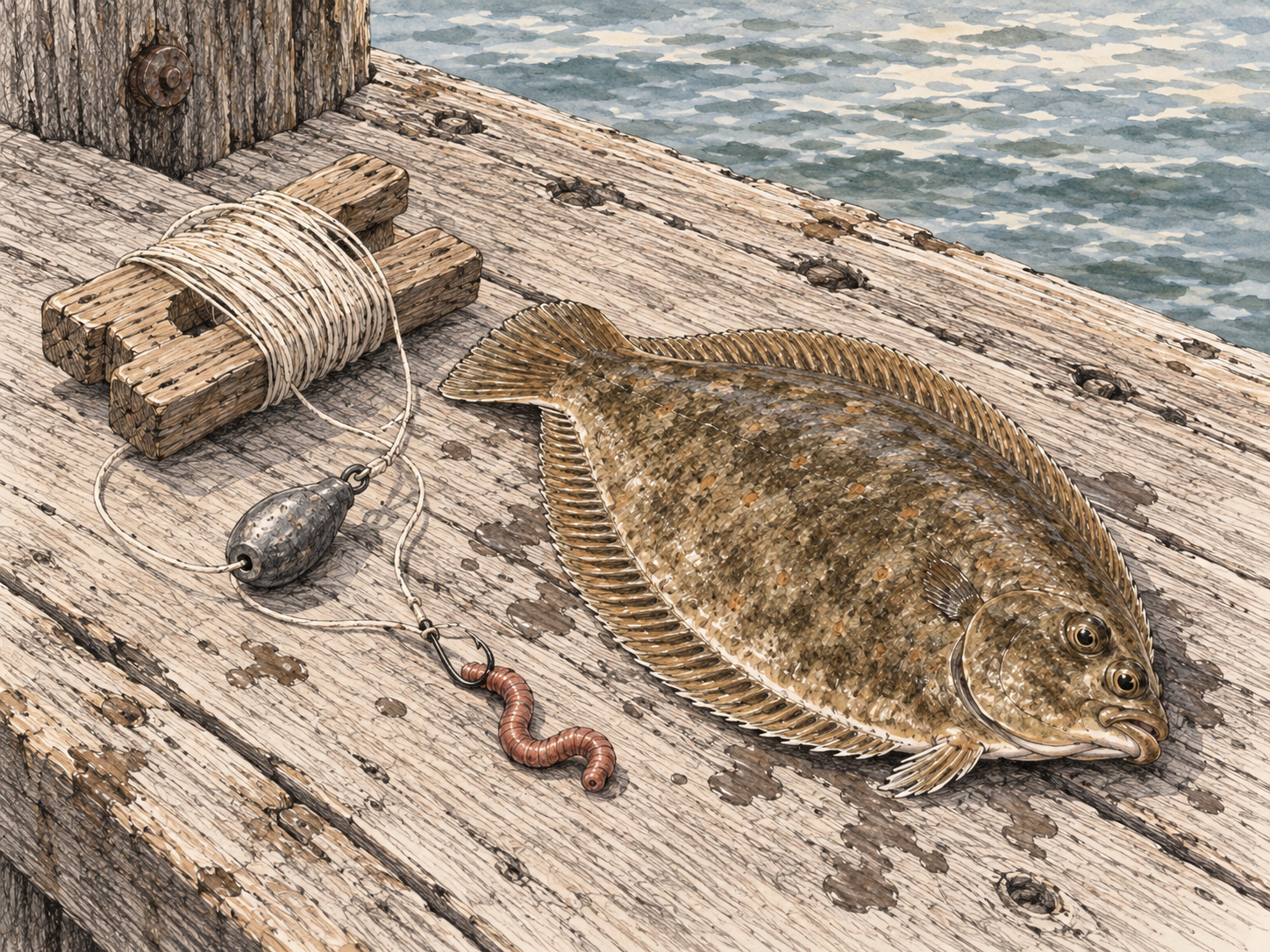
Flounder and Boston’s Flat is Back Campaign
Flounder and Boston’s Flat is Back Campaign
Flounder was easy to catch, which was part of what made it such perfect fishing for kids.
We didn’t need fancy rods and reels. The hand line was wrapped around a little square wooden frame that, in my memory, looked like it had been made out of oversized Popsicle sticks. There was a heavy sinker at the end because flounder live on the bottom.
You baited the hook with one of those sea worms, dropped the line straight down until the sinker hit bottom and waited.
That was pretty much it.
You could feel the fish take the bait through the line in your fingers. Then you pulled it up.
And very often there was a flounder on the other end.
Flounder are funny-looking fish, almost ridiculous really, but in a way that makes them oddly cute. They lie flat on the bottom with both eyes crowded onto one side of their face because they don’t need eyes underneath them. The top side is darker, the side facing up toward the water, while the bottom side is pale, almost white, resting against the sand or mud.
Even as kids, we understood the basic logic of it. They were bottom fish. They didn’t need eyes on the bottom.
There was something almost cartoonish about them when you pulled one up on the line, that lopsided little face looking back at you as if nature had played a joke. But they were also perfectly designed for the life they lived, blending into the bottom and waiting there quietly until one of our sea worms came along.
And we caught them.
I don’t mean we occasionally came home with enough fish for dinner.
We caught trash cans full of flounder.
Big trash cans.
There is something almost unbelievable about that memory now, but at the time it didn’t seem remarkable. That was simply what Boston Harbor gave us.
And once they were in the boat, they became dinner.
Even as kids, we learned how to filet them. The meat was delicate and white, mild enough that even a child would eat it without complaint. This wasn’t one of those fish you had to talk somebody into trying. Flounder was easy to love.
At home we fried it in oil in a cast-iron pan, simple and hot. The outside turned golden, the inside stayed tender, and that was dinner.
If there was a better meal after a day on the water, I don’t remember it.
Flounder is also remarkably nutritious — lean protein, relatively few calories and little saturated fat.
Of course, I wasn’t standing on my father’s boat thinking about nutrition.
I was a kid with a hand line and a sea worm, catching dinner.
That is why the Massachusetts Division of Marine Fisheries’ new Flat Is Backcampaign caught my attention.
The state is trying to persuade more of us to eat locally caught flounder. Ten Massachusetts chefs are featuring special flounder dishes through September 30, and the campaign recently got another push with a Boston tasting.
But underneath the cute campaign name is a serious Massachusetts fishing story.
Our fishermen aren’t catching anywhere near all the flounder they are allowed to catch because there isn’t enough demand for it.
Think about that for a minute.
We live in New England, surrounded by some of the most famous fishing waters in the world, and Massachusetts fishermen can have trouble finding buyers for Massachusetts fish.
Somewhere Along the Way, We Forgot How to Eat Like New Englanders
Americans have settled into a remarkably narrow seafood habit.
We order salmon. Shrimp. Tuna. Cod.
Over and over again.
There’s nothing wrong with any of those fish. But when everybody wants the same handful of species, fishermen can be surrounded by perfectly good local seafood that nobody is asking for.
At the same time, imported seafood competes with fish being landed right here by Massachusetts boats.
That disconnect fascinates me.
Boston sells its relationship with the ocean everywhere. Our harbor, our lobster rolls, our fishing history, our chowder and our waterfront are part of the identity we sell to the world.
But how much of the seafood we actually eat reflects the ocean right outside our door?
Flounder is a perfect example.
You may even be eating it without realizing it.
Several names you’ll see on New England menus are varieties of flounder. Lemon sole, gray sole, blackback and fluke all belong to the same wonderfully strange family of flatfish.
And strange they are.
Summer flounder actually begin life swimming upright with one eye on each side of their heads. As they develop, one eye migrates over to the other side and the fish begins living flat along the ocean bottom.
You have to admire a fish willing to completely rearrange its face to make a living.
Boston Harbor Was Our Playground
The flounder brought back much more than memories of fishing.
It brought back the whole harbor.
My father’s boats had another memorable feature: the engines broke down.
Frequently.
We would be somewhere in Boston Harbor and suddenly the engine would stop, leaving my father trying to repair it while the rest of us floated around waiting.
That is where I learned what it meant to be seasick.
Really seasick.
When you’re already nauseated, there is nothing quite like sitting on a disabled wooden boat rolling gently from side to side while someone assures you he will have the engine running again soon.
But I wouldn’t trade those years for anything.
Orient Heights Beach would fill up with neighborhood families and local kids, but we seldom spent much time on the beach because we had the boats.
And the boats gave us a kind of freedom that most city kids never got.
Before I was old enough to drive a car, I was getting into speedboats with other kids whose parents really did own yachts and heading out without our parents.
Think about that now.
We were city kids who were too young to drive, but we could take a boat out onto open water by ourselves.
We would go over toward Logan Airport and sit near the end of the runway while planes came roaring in directly over our heads.
I am surprised I still have my hearing.
We’d take the boat all the way to Nantasket Beach by ourselves.
On calm mornings we would water-ski in the bay around Orient Heights.
That was our freedom.
And I remember the physical feeling of it as much as anything else. The salty air against my skin as we cruised through the harbor. The spray catching my face. The taste of salt on my lips. The wind pulling at my hair and the sun warming skin that had already been splashed with seawater.
On water skis, the salt air hit even harder. You could feel the spray on your legs and face, the water beneath you smooth enough on a calm morning to skim across it, and that salty film would stay on your skin long after you were back on shore.
Those are the memories that don’t really leave your body.
It was Boston before Boston Harbor became polished real estate and waterfront dining. It was boats and gasoline and salt water and scraped knees and sunburns and engines that sometimes worked and sometimes didn’t.
It was a blast. Wicked fun.
One of my friends was one of the Conigliaro cousins. If you grew up around Boston then, you knew that name. Tony Conigliaro was the brilliant young Red Sox player whose career was forever changed when he was hit in the face by a pitch in 1967.
Everything seemed connected in those days — East Boston, the Red Sox, Logan Airport, neighborhood families, the harbor, the beaches and those boats.
It was all just Boston.
Visitors can't recreate the Boston Harbor of my childhood, but you can still get out on the water. If you're planning a trip, I put together a guide to which Boston Harbor cruise is actually worth taking.
The Harbor Changed. So Did Our Dinner Plates.
Boston Harbor isn’t the same harbor I grew up on, and Massachusetts fishing isn’t the same business it was then either.
Commercial fishing today is tightly regulated. There are catch limits, size limits, stock assessments, gear restrictions and layers of rules intended to balance a working fishing industry with healthy fish populations.
But one thing hasn’t changed.
People still have to buy the fish.
Massachusetts has a huge seafood economy. Fishermen, wholesalers, processors, restaurants, markets and waterfront businesses all depend upon it. And when Massachusetts boats land species that consumers don’t want, regulations aren’t the only thing determining what gets caught.
The market does.
If nobody orders flounder, eventually it doesn’t matter how much flounder fishermen are permitted to catch.
There has to be somebody on the other end of the dock who wants to eat it.
Maybe Eating Local Seafood Should Mean Eating Local Seafood
We talk constantly about eating local.
We go to farmers markets. We ask where vegetables were grown. Restaurants advertise local produce, local cheese, local beer and local meat.
Then we sit beside the Atlantic Ocean and order a fish that may have traveled thousands of miles to reach our plate.
Maybe seafood deserves the same questions.
What did Massachusetts fishermen land this week? What is abundant? What is local?
And maybe the answer isn’t always lobster.
The Flat Is Back campaign ends September 30, but I hope the idea behind it doesn’t.
If you see flounder, fluke or sole on a Massachusetts menu, try it.
Ask your fish market what’s local.
Try something you haven’t ordered before.
Because supporting Massachusetts fishing doesn’t necessarily require some grand gesture. Sometimes it can be as simple as changing what you order for dinner.
One Bite Can Take You Home
For me, flounder doesn’t need a marketing campaign.
It needs a hand line.
One bite takes me back to East Boston.
I can see that old wooden cabin cruiser and my father bent over the engine trying to get us home. I can see my mother and sister climbing into the dinghy while my father rowed us out to the mooring. I can remember being seasick and thinking I might actually die before he got the engine started.
I can see my Mémère in pants for the first time, climbing aboard a boat in a world that had already changed more than once since she was born in 1899.
I can see the long marshy road where we went for bait and those awful biting sea worms waiting to become somebody’s dinner before becoming somebody else’s.
I can see Orient Heights Beach crowded with families while we headed for the boats instead.
I can see the ridiculous little faces of the flounder we pulled up from the bottom, both eyes looking back at us from the same side.
I can hear those planes screaming over our heads at Logan.
I can feel the water beneath a pair of skis on a perfectly calm morning off Orient Heights.
I can feel the salt air on my skin and taste it on my lips.
And I can see those ridiculous trash cans full of flounder.
We weren’t wealthy. We weren’t yacht people. We were a blue-collar Boston family with old wooden boats, a father who could fix almost anything and a harbor that somehow belonged to us.
Massachusetts wants to make flounder cool again.
I didn’t know it had ever stopped being cool.
Join My Community
GoBoston isn’t just about telling you where to stay, what to see or which restaurant to try. It’s about the neighborhoods, people, food and memories that made Boston what it is — and the Boston stories we lose when nobody bothers to tell them.
If you grew up fishing Boston Harbor, remember the old yacht clubs, had a family boat that probably should never have left the dock, or have your own favorite Massachusetts seafood story, join the conversation and tell me about it in the comments.
And if you value independent local writing that connects the Boston we’re living in with the Boston so many of us remember, please consider becoming a paid subscriber at my GoBoston Substack. Your support helps me keep finding and telling these stories.
The campaign continues through September 30, and I’ve added the participating Boston restaurants to my What’s Happening in Boston guide.
Sources
Massachusetts Division of Marine Fisheries, “Massachusetts Launches ‘Flat Is Back’ Campaign to Promote Local Flounder,” August 19, 2026.
Massachusetts Marine Fisheries Advisory Commission, August 2026 meeting materials and information on the September 14 Boston flounder event.
Coming to Boston? See What’s Happening in Boston right now, or get out on the water with my Boston Harbor cruise guide.