
Boston Police Are Using AI to Monitor Social Media
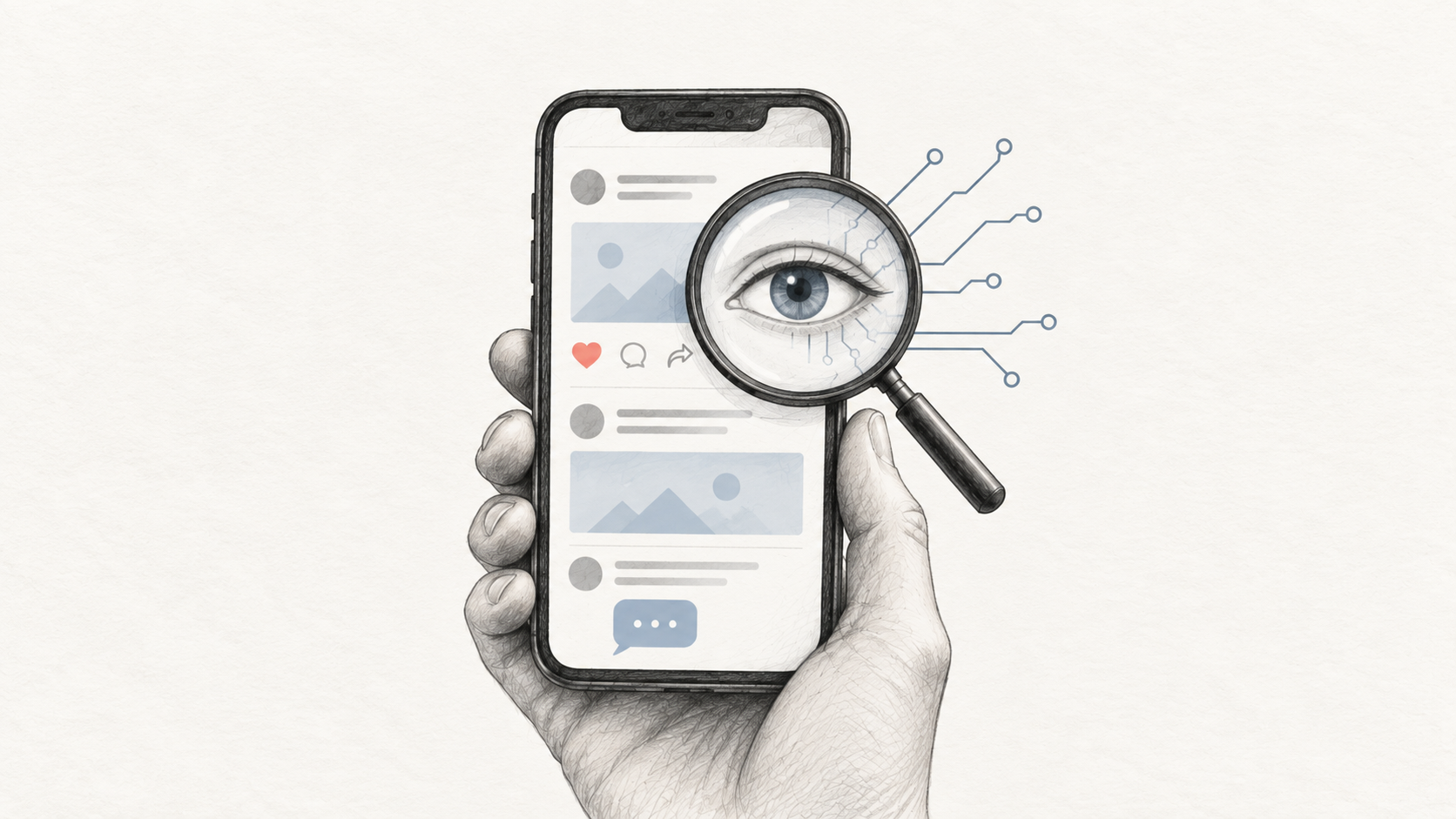
Boston Police Are Using AI to Monitor Social Media
The new LifeRaft system can analyze public social-media posts. The bigger question is whether AI can understand what people actually mean.
Boston police have a new artificial-intelligence tool that can search enormous amounts of publicly available social-media content, looking for information that could help identify threats or assist criminal investigations.
That alone didn't surprise me very much.
Then I got to two words: sentiment analysis.
That's when I stopped.
Because finding what someone wrote is one thing. Asking artificial intelligence to decide whether those words are hostile, aggressive or potentially dangerous is something else entirely.
And by coincidence, I had just spent part of the day thinking about exactly how badly meaning can change depending on context.
Same Words. Different Meaning.
Yesterday I was working with words someone else had written and experimenting with putting different kinds of music behind them.
The words never changed.
Their meaning seemed to.
One musical treatment made them sound angry and confrontational. Another made them sound more resigned. Change the music again and someone else heard humor that I hadn't particularly heard at all.
Same words. Different interpretation.
Music supplied context. Tempo supplied context. The singer supplied context. A pause or emphasis on a particular word supplied context.
Then I read that Boston police are using artificial intelligence capable of analyzing the sentiment behind what people say online.
My first reaction was WOW.
My second was closer to holy shit.
We are asking a computer to do something human beings screw up every day: decide what another human being really meant.
What Is LifeRaft?
The Boston Police Department began using LifeRaft in June. The AI-powered platform can search large amounts of publicly available online material using information such as names, phone numbers, social-media handles, keywords and geographic information.
BPD says access is limited to 10 specially trained members of the department who use the system several times a week.
There are legitimate reasons police need access to information people post publicly.
If someone is threatening an elected official, stalking a sexual-assault victim, planning violence or using social media as part of another crime, I expect police to investigate it.
Boston police say social-media analysis tools have assisted more than 30 sexual-assault investigations and helped with the arrest of someone accused of making violent threats against elected officials.
That matters.
The question isn't whether police should ever look at social media.
Of course they should.
The question is what happens when technology moves beyond finding what someone said and begins helping police interpret what that person meant.
What Did I Say — Or What Did I Mean?
Think about how often an ordinary text message gets misunderstood because somebody can't hear your voice.
Sarcasm looks serious. A joke looks angry. A short answer sounds hostile. Someone quotes another person and the quotation gets mistaken for their own opinion.
Now add political speech.
Was someone threatening an elected official, or saying they should be defeated in the next election?
Was someone advocating violence, or writing a song lyric?
Were they angry, sarcastic, frightened, joking, protesting or simply blowing off steam?
Those distinctions are not minor.
Sometimes they are the whole question.
And now software can help decide whether language appears hostile or aggressive.
Anger Is Not a Crime
Someone being angry with their government is not a crime.
Someone saying ugly things about a politician is not automatically a criminal threat.
Protesting isn't a crime. Political dissent isn't a crime. Sarcasm isn't a crime. Writing a furious post isn't a crime.
A credible threat of violence is different. Police need to be able to identify and investigate those threats.
But there is an enormous distance between this person sounds angry and this person presents a criminal threat.
Boston's surveillance rules say people cannot be monitored solely because of characteristics or beliefs including political views and religion unless they are directly connected to criminal activity.
But sentiment analysis creates another question.
What happens when an algorithm decides someone's language appears hostile enough to deserve attention?
Does an officer then look at the person's other posts? Is that AI assessment stored? How much context does the officer see? How long is the information retained? Can it be shared with another agency?
And what happens when the machine gets the meaning completely wrong?
Boston Has Been Here Before
This isn't Boston's first fight over social-media surveillance.
Nearly a decade ago, BPD abandoned plans for a $1.4 million expansion of social-media monitoring after backlash from civil-rights and religious groups concerned about profiling and surveillance of protected activity.
The issue didn't disappear.
Earlier this year, the Brennan Center for Justice released the results of a years-long investigation into Boston police social-media monitoring. Researchers reported that some monitoring had been conducted informally, with limited documentation and insufficient safeguards against biased enforcement or surveillance of activity protected by the First Amendment.
That history doesn't mean every surveillance tool will be abused.
It does mean Boston should already understand why clear rules and public oversight matter.
City Councilors Say They Weren't Told
There is another part of this story that deserves attention.
Boston City Councilors Julia Mejia and Benjamin Weber have questioned why the council wasn't informed about the acquisition of LifeRaft.
Weber serves on Boston's Surveillance Oversight Advisory Board.
This isn't the first disagreement between the council and BPD over surveillance technology. Boston created a surveillance ordinance specifically because technology capable of gathering information about residents should not simply appear inside city government without oversight.
And that gives us a very basic question:
Who gets to decide what surveillance technology Boston police may use?
If police can acquire increasingly sophisticated technology first and explain it afterward, it is reasonable to ask what meaningful oversight looks like.
But It's Public
One response to all of this is obvious.
Social media is public.
And much of it is.
If I publish something publicly online, I can't expect law enforcement to pretend the information doesn't exist.
But there is a difference between a detective looking at one Facebook post connected to a particular investigation and technology capable of searching huge amounts of speech, connecting information from multiple sources and helping determine which language appears threatening or hostile.
Scale changes things.
AI changes them again.
The technology isn't merely helping someone find the words.
It can help interpret them.
Who Teaches a Machine What Hostility Sounds Like?
This may be the part I find most fascinating.
Someone has to decide what hostility looks like.
Someone has to determine what language, patterns or behavior suggest aggression.
And language is extraordinarily complicated.
People swear. People exaggerate. People use slang. People joke. Sports fans talk about destroying and killing the other team. Political candidates tell supporters to fight. Protesters demand that politicians pay a price at the ballot box. Songwriters write about things nobody believes they actually intend to do.
Different generations use language differently. Different neighborhoods use language differently. Different cultures use language differently.
Context makes the difference.
Human beings who know each other misunderstand each other every day.
So what happens when artificial intelligence misunderstands us?
The Hard Part Has Always Been Knowing the Difference
This doesn't have to become an argument between people who believe police should use every technology available and people who believe police should never monitor social media.
There is plenty of room in between.
Police should investigate credible threats and crimes committed online.
Boston residents should know what surveillance technologies their police department uses, how those technologies work, what rules govern them and what happens when they get something wrong.
Both can be true.
What deserves scrutiny is the movement from investigating behavior to interpreting speech.
Maybe I happened to read this story on exactly the right day, because I had just watched the emotional meaning of someone's words change simply because I changed the music underneath them.
The words didn't change.
The interpretation did.
Sometimes words are angry. Sometimes they're wounded. Sometimes they're funny. Sometimes they're political. Sometimes they're art.
And sometimes they really are dangerous.
The hard part has always been knowing the difference.
I'm not ready to assume artificial intelligence does.
Follow GoBoston on Substack
Join our Boston community at Substack for more Boston stories, local news, history, politics, neighborhood pieces and the things happening around the city that deserve a closer look. GoBoston on Substack.
Sources
Reporting for this article included the City of Boston's surveillance reporting, The Boston Globe's September 17 reporting on BPD's use of LifeRaft, and the Brennan Center for Justice's May 2026 investigation into Boston Police Department social-media monitoring.